


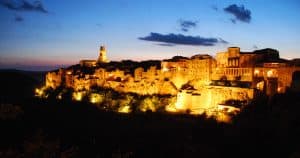





Little Jerusalem
A jump into the past. A precious cultural and traditional treasure of the Pitiglianese community. The Jews of Pitigliano have contributed in an exemplary way to the growth of the town and their presence is felt in every corner and with every breath. Sacred and memorial place, not to be missed ...

Walking through the historic center among the narrow and characteristic alleys, you find yourself in the ghetto with its Synagogue that evokes sacred atmospheres and thoughts that inevitably slip into memory in search of images of a recent heavy past. A visit is a must ...
I never thought I'd find a synagogue in Tuscany. Rereading the history it is clear that the Jews arrived in Italy and chose Livorno for the
Its particular characteristics. In this country this synagogue represents a point of reference for the Jewish communities in the area. The visit is rich and meets the expectations of the most demanding. A must try ....
It is possible to visit the ancient ghetto and the synagogue with a single ticket costing € 5 ... Interesting structures dug into the tuff by the Kasher butcher, passing through the oven and the cellar ... in the upper part of the structure there is the synagogue where it is mandatory for men to wear a headdress ... to see! ....
If you happen to be visiting Pitigliano, take some time to visit the Jewish quarter, the ghetto established by the doctors in 1662, later named "the little Jerusalem". Obviously you cannot miss a visit to the Synagogue and the premises surrounding it, which from the ritual bath "Tevilà" to the preparation of "Kasher" food (wine and meat) and unleavened bread, show the main references of the Jewish community's way of life. .....
I had seen the film "the bread of memory" at the house of cinema in Rome, it tells the story of Elena Servi, the last Jewess of Pitigliano.
Thanks to the Orsini family, in Pitigliano in the sixteenth century, many Jews fleeing persecution and imprisonment in ghettos. In those years the Synagogue was built, the cemetery on a tuff slope near the town.
With the arrival of the Medici, the Jews were evicted from their homes and forcibly moved to the Ghetto. The community grew to reach 1/4 of the country's population. Today the rooms of the ancient ghetto can be visited: the ritual bath, the slaughterhouse, the oven, the wine cellar, the dry cleaners and the synagogue. During the visit you can feel intense emotions walking in these caves dug into the tuffaceous walls. The small museum is interesting and cozy ....
A concentrate of history within this wonderful country, told to me by grandparents and parents who lived through the war years. The renovated synagogue has the possibility of being seen with guided tours that can be booked directly on the spot. In addition it is possible to buy characteristic products of the kosher tradition ...
Pitigliano is a jewel, an enchanted and fascinating place that seems to emerge from the tuff rock on which it rests. The ocher-colored buildings seem one with the rock.
Pitigliano is also known as the Little Jerusalem, due to the historical presence of a Jewish community and a Synagogue, one of the most characteristic monuments of the historic center. It seems that it was built (in 1598) on a pre-existing oratory. Inside we find interesting furnishings (16th and 17th centuries). Under the temple we find the rooms for the Ritual Bath, the Unleavened Oven, the Kosher Butcher, the Kosher Cellar and the Dyeing ...